Last updated November 22, 2026
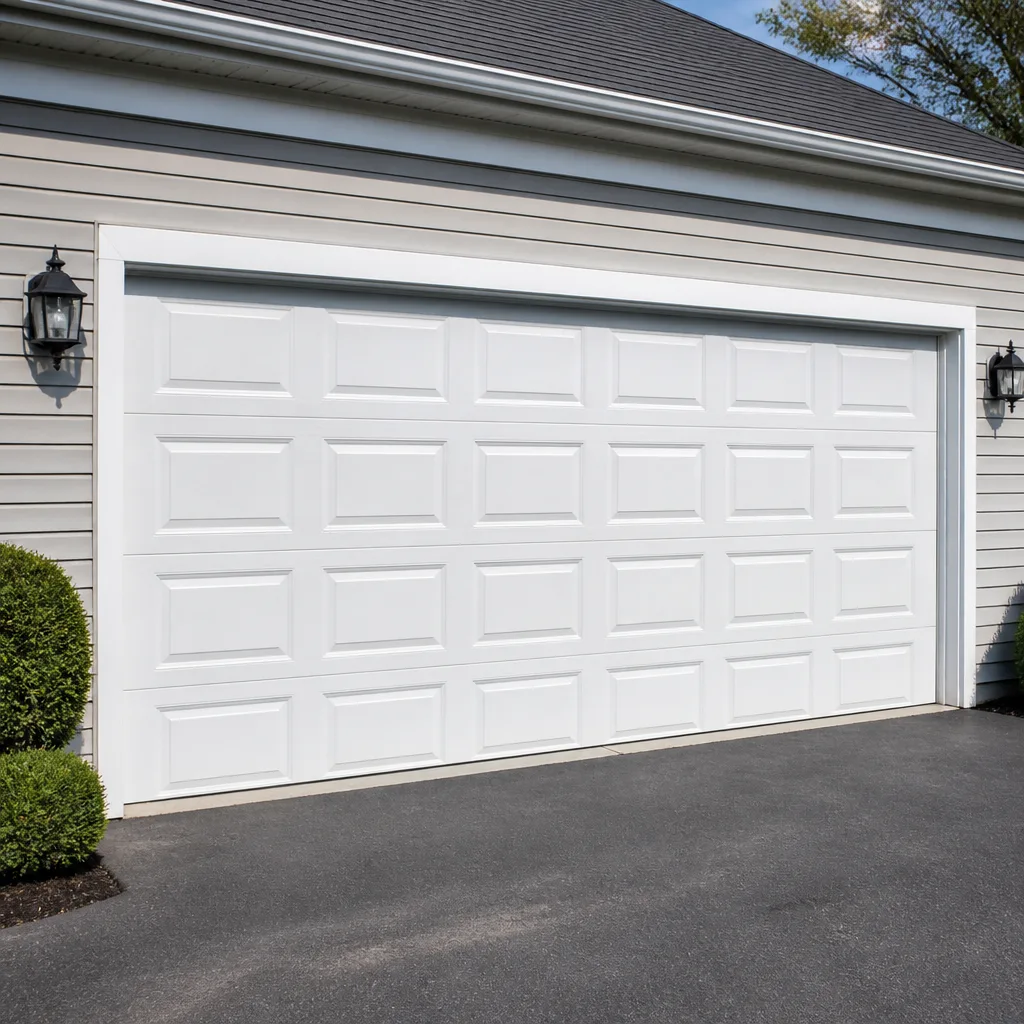 Raised-panel steel
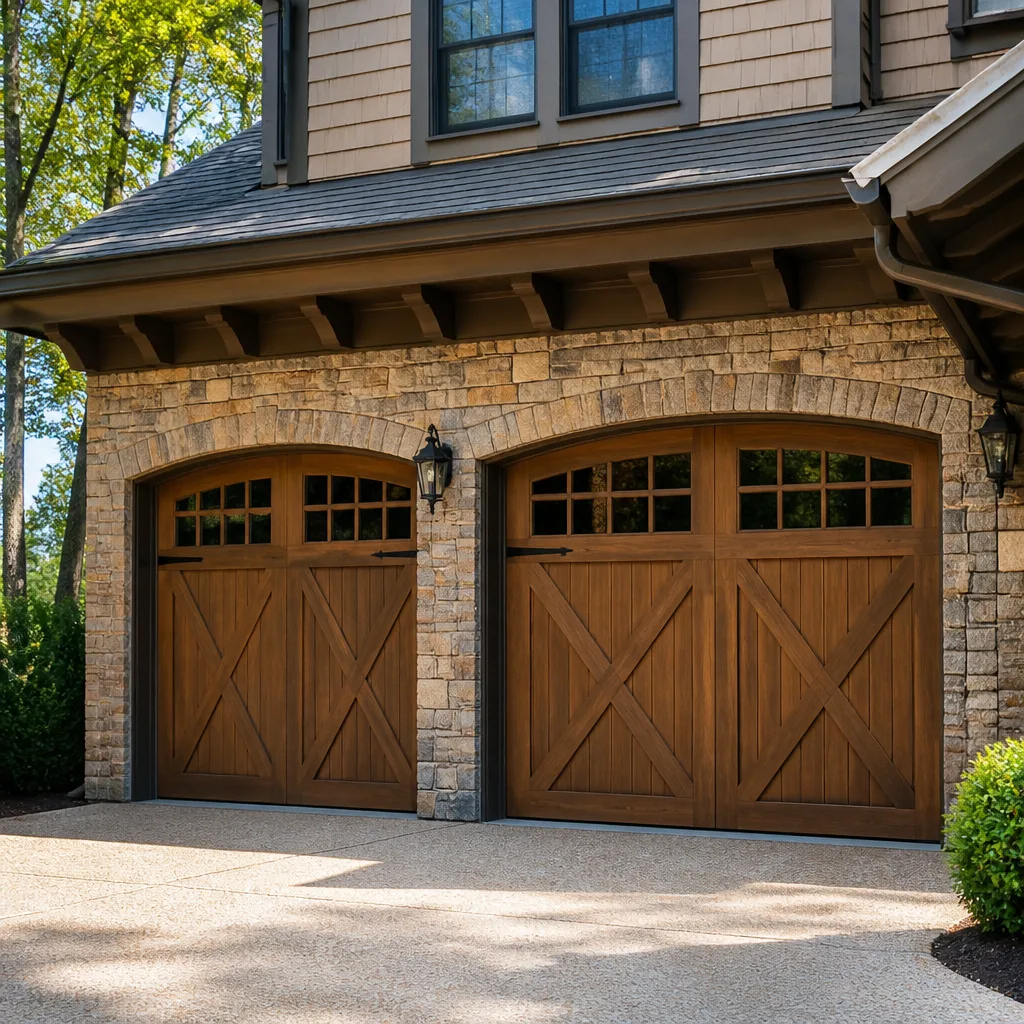 Carriage house
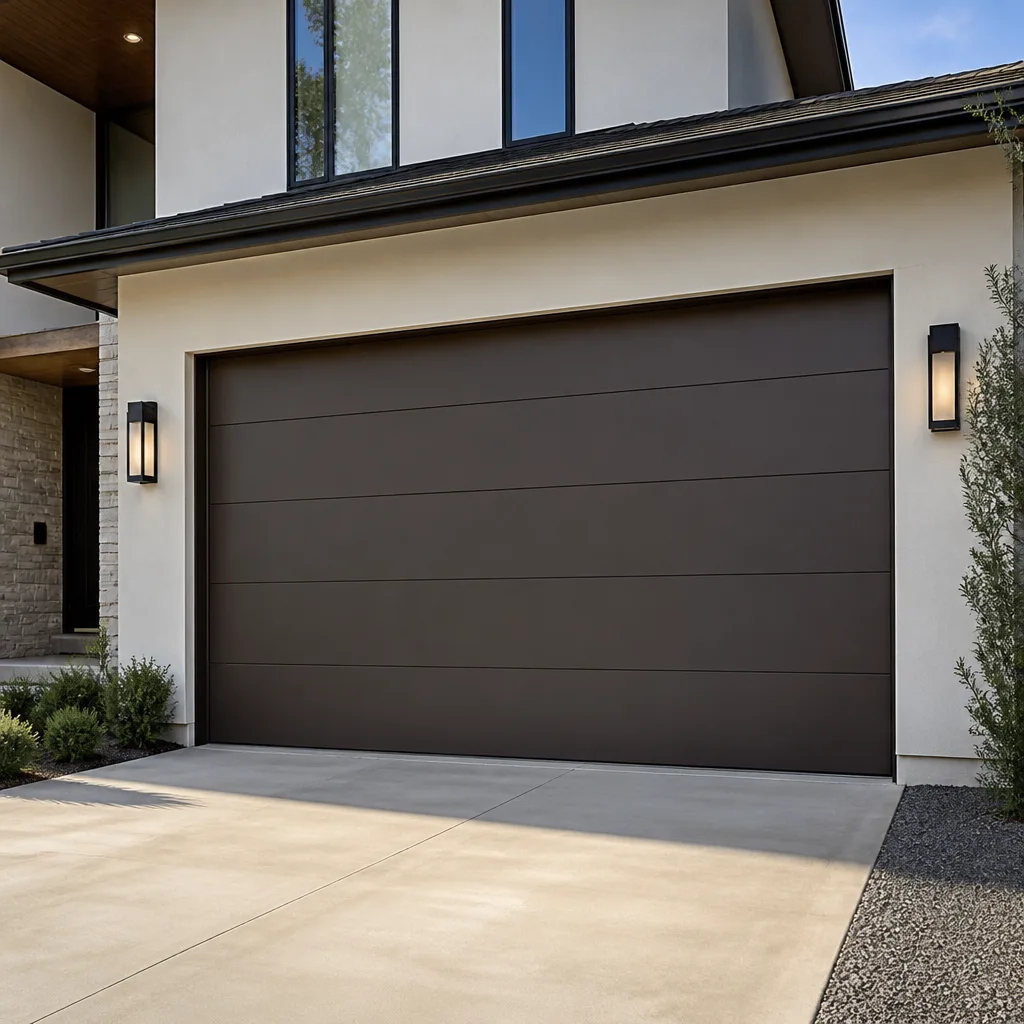 Modern flush
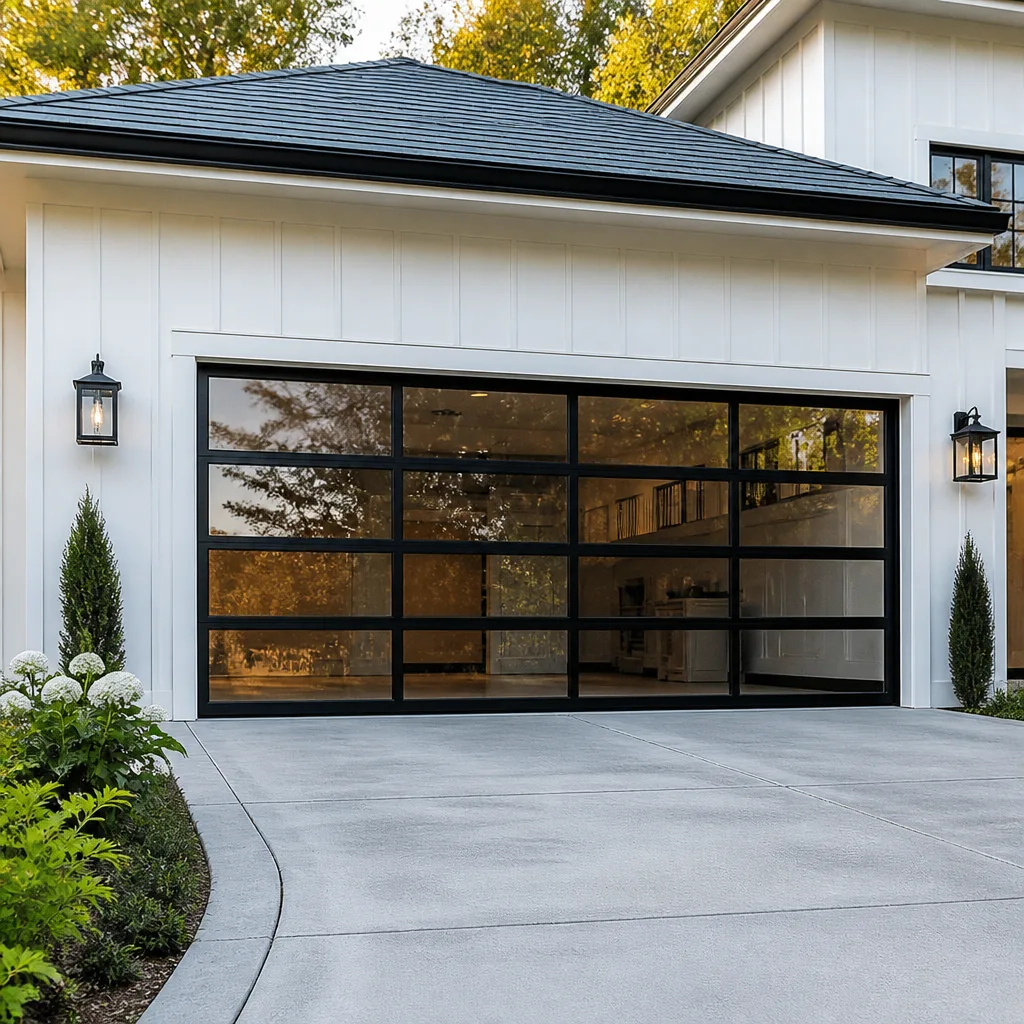 Full-view glass
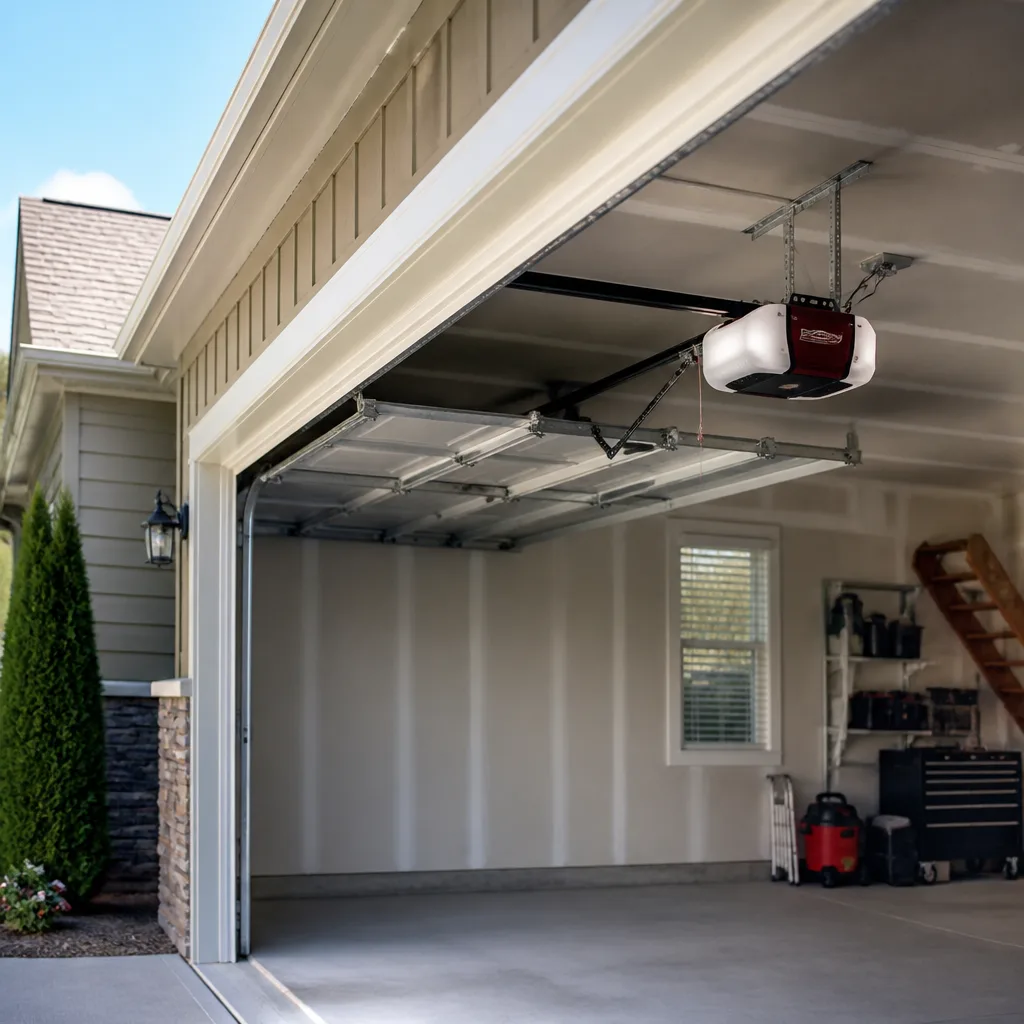 LiftMaster openers
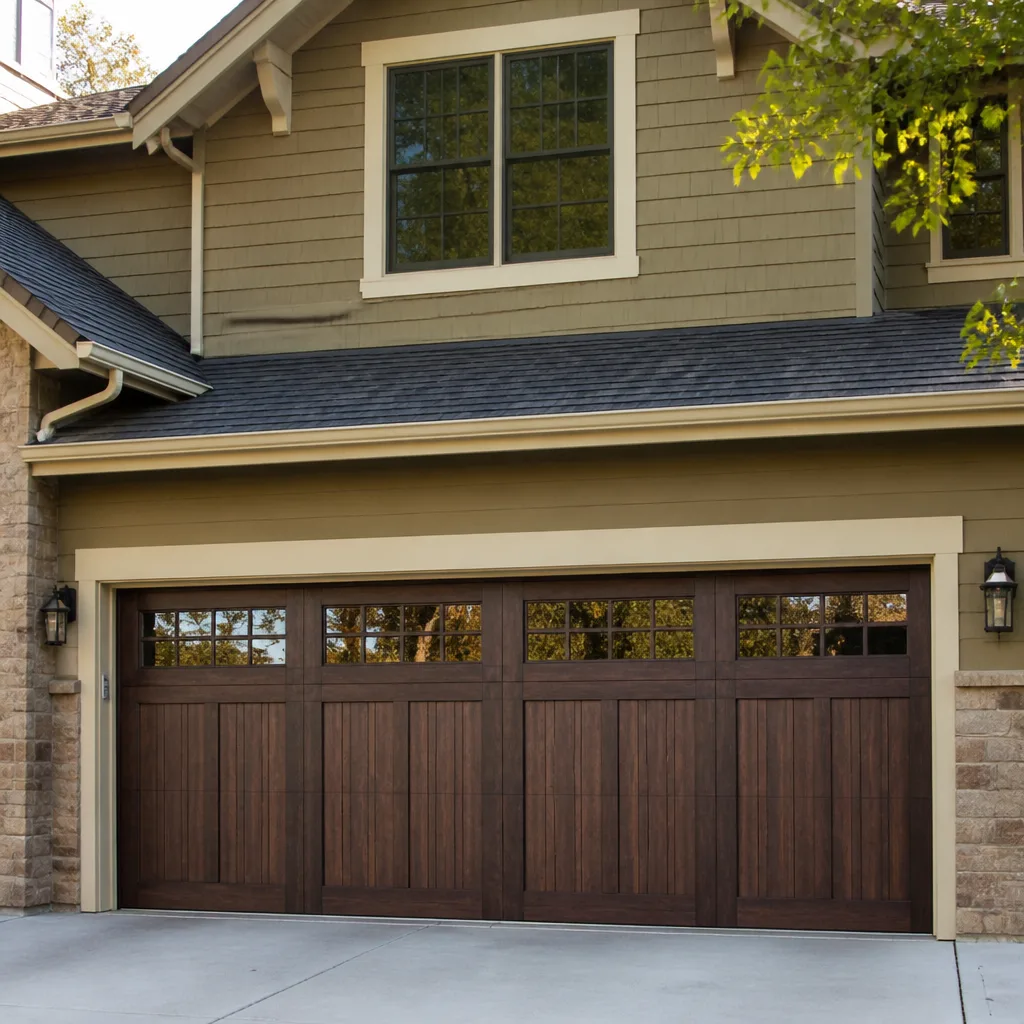 Chamberlain openers
Full 25-point door and opener safety check with every visit - springs, cables, rollers, tracks, and your LiftMaster or Chamberlain opener included
You get a price before we start. It does not change when the pro arrives.
Get your free estimateHow to Hire a Garage Door Contractor in Quincy: A Step-by-Step Guide
Most homeowners in Quincy think the hard part of a garage door problem is the repair itself. It isn’t. The hard part is the hiring decision, because the garage door trade has an unusually low barrier to entry and an unusually high physical risk. A torsion spring carries a tremendous amount of stored tension. Winding one with the wrong bars, or with improvised tools, is how people get hurt. The difference between a real garage door technician and an unlicensed handyman who says he can “take a look” often isn’t the price on the invoice. It’s whether the person winding your springs knows the mechanical sequence cold. This guide gives you a specific vetting framework so you hire once, pay once, and don’t end up paying twice for the same door.
Quick Answer
To hire a garage door contractor in Quincy, verify the business is registered with the state, confirm they carry insurance, ask for a written estimate that itemizes labor and parts by brand, and insist on a warranty in writing before anyone touches the door. Skip anyone who won’t put a price in writing, can’t name the parts they’ll install, or answers the phone with a vague story about being “in the area.” The right contractor is specific, paperwork-first, and comfortable explaining exactly what’s wrong with your door before quoting you.
Styles & brands we work with
- Raised-panel steel
- Carriage house
- Modern flush
- Full-view glass
- LiftMaster openers
- Chamberlain openers
Table of Contents
- What Massachusetts Requires and What You Should Verify
- The Five Questions to Ask Before Anyone Touches Your Door
- How to Read a Garage Door Quote Like a Contractor
- Red Flags Unique to the Garage Door Trade
- How Emergency and After-Hours Pricing Should Be Disclosed
- Why Spring Work Is the Line You Shouldn’t Cross Yourself
- Brands, Parts Sourcing, and Why It Matters
- Repair or Replace? A Decision Framework
What Massachusetts Requires and What You Should Verify
Massachusetts requires home improvement contractors to register with the state and to carry insurance. That registration is a baseline legal requirement, not a badge of quality. What it gives you is a paper trail: a number you can check, a way to confirm the business is accountable, and a path to a complaint if something goes wrong. What it doesn’t tell you is whether the person winding your springs has ever done it before. That part is on you, and this is where Quincy homeowners can do a lot better than most.
A legitimate garage door company should be able to give you, without hesitation, its registration number, proof of insurance, and a written estimate. If you’re dealing with a handyman who “does a bit of everything,” that’s a different risk category entirely. Garage doors are a mechanical specialty. The springs, cables, and brackets are under load, and the opener is a logic board away from a dead door. Someone who fixes decks and paints fences is not automatically qualified here, and the honest ones will tell you so.
Here’s what to verify before you commit, and it takes about ten minutes:
- State registration: Ask for the contractor registration number and confirm it’s active. A real business has this ready.
- Insurance: Ask for a certificate of insurance for general liability. Anyone who hesitates or says “we’re covered” without paperwork is a risk to your home and your wallet.
- Written estimate: Verbally agreeing to a range over the phone is not hiring a contractor. It’s buying a mystery.
- Parts by name: A good contractor can tell you the spring wire gauge, the bearing type, and the brand of opener they’ll service.
- Warranty terms: In writing, with a clear duration on labor and on parts, separately.
None of this is exotic. In our experience, the contractors who tick all five boxes are the ones you’d actually want in your garage. The ones who balk at any single item are telling you something. A contractor who can’t supply a written estimate today likely can’t be found next month if the door fails.
The Five Questions to Ask Before Anyone Touches Your Door
This is the heart of the guide. Before you let anyone put a tool to your door in Quincy, ask these five questions. The answers tell you almost everything about how the job will go. We’ve seen the difference between a contractor who can answer these cleanly and one who improvises, and it’s the difference between getting the door fixed right the first time and getting a call back in a month.
Question 1: What exactly is wrong, and how do you know? A qualified technician diagnoses before quoting. If the door is off its track or the spring is broken, they should be able to demonstrate it, not just assert it. Ask them to show you the failed component. A broken torsion spring has a visible gap. A worn cable shows fraying. If they can’t point to it, be skeptical.
Question 2: What brand and model of parts will you install? This is the question that separates specialists from generalists. A real garage door contractor works with LiftMaster, Chamberlain, Genie, Clopay, Amarr, Wayne Dalton, Craftsman, and Raynor equipment, and they can tell you what they’ll put in your door. If the answer is “whatever we have on the truck,” that’s a tell. Generic replacement springs and no-name openers can cost less up front and cost you again in a year. Our technicians have up to 10 years of experience, and in that time the pattern is clear: brand-native parts last longer and cause fewer callbacks.
Question 3: What’s the warranty on labor, and what’s the warranty on parts? These should be stated separately, in writing. A tiered warranty that’s shorter on labor than on parts is normal. A verbal “we stand behind our work” is not a warranty. It’s a vibe. Ask for the specific duration, in numbers, and get it on the estimate.
Question 4: Will you provide a written estimate before any work starts? The answer must be yes. The price you’re quoted is the price you pay, set by the written estimate, and it’s agreed before a single bolt turns. If a contractor says they “can’t quote until they’re out there” or “we’ll figure it out after,” walk away. The estimate is free, and it should be in writing.
Question 5: Who actually shows up, and are they insured? It’s a fair question. You’re letting this person into your garage and your home. The person doing the work should be covered, and the contractor should be able to confirm that without a fuss. If they subcontract to someone you’ve never spoken to, that’s worth knowing up front.
These five questions take about five minutes to ask. They also filter out most of the people you don’t want near your garage door, and that’s the entire point of this framework.
How to Read a Garage Door Quote Like a Contractor
A written quote is where the hiring decision gets made or quietly wrecked. The low-ball quote is rarely the honest one. When a quote comes in dramatically lower than the others, the difference is almost always in the parts and the labor description, and the door usually pays for it on the next service call. Here’s how to read a quote like someone who’s been on the other side of it.
A thorough quote itemizes the job. It names the springs, the opener, the hardware, or the door panels. It separates labor from materials. It states the warranty duration. It tells you the brand. A low-ball quote tends to be vague: “spring repair,” a number, and a promise. No wire gauge, no bearing type, no labor breakdown. That vagueness is where the cheap spring goes in and the callback comes out.
A few specifics help. Spring pricing is per spring, and matched pairs are usually replaced together, so a pair costs about twice a single spring. A quote that lumps something like that into one number without saying whether it’s one spring or two is a quote you can’t compare against anything. Ask.
Watch for these markers:
- Itemized labor and parts: both should appear, with the parts named by brand where possible.
- Spring quantity and spec: one spring or a matched pair, and the wire gauge if you ask for it.
- Opener model: if an opener is being replaced, the model number should be on the quote, not a category like “a new opener.”
- Warranty, separate for labor and parts: in writing, with a number attached.
- A stated range, with a note that the written estimate sets the final price: estimates are estimates, and the written quote is what you pay.
The single biggest question to ask about any quote is this: “Will the price change once you see it in person?” A contractor who’s confident in their diagnosis and their parts will tell you the quote holds. One who leaves room for a mid-job surprise is telling you to budget for it. Get it in writing, and get it agreed before work starts. That’s the whole rule.
Red Flags Unique to the Garage Door Trade
Garage doors have their own warning signs, some of which don’t show up in other trades. A dishonest contractor in this specialty relies on the fact that most homeowners don’t know what a torsion spring looks like or what a proper quote contains. Once you know the red flags, they’re not subtle.
Vague labor descriptions. “Spring replacement” with no detail is a red flag. Was the pair replaced? With what? Was the bearing plate checked? If you can’t tell from the quote what’s being done, you can’t tell whether it was done.
Refusal to provide a written estimate. This is the clearest one. If they won’t put a number on paper before they start, they can put any number on it afterward. The written estimate protects you. Anyone who won’t give you one is planning for the opposite.
No physical business address. This matters in Quincy as much as anywhere. A contractor who answers from a phone number and a website with no address, no registration, and no insurance paperwork is not a business you can hold accountable. If the door fails in six months, you need somewhere to send the follow-up.
Cold-call knock on the door. Someone “working the neighborhood” and “noticing you might have a problem” is a classic. Treat an unrequested knock as a reason to slow down, not speed up.
Immediate upsell to full replacement. A broken spring does not mean you need a new door. A dead opener does not mean your door is obsolete. A contractor who diagnoses a small problem and immediately proposes a full replacement is probably not diagnosing. Same door, fixed right, is usually the right answer.
No brand on the parts. “A new opener” or “a replacement spring” with no brand or model is a red flag. Real contractors name what they’re installing because they know how much it matters. Names like Genie or Clopay or Chamberlain belong in a quote.
Quoting over the phone with no inspection. Garage door problems come in a lot of flavors, and a phone quote is a guess wearing a price tag. A serious contractor diagnoses in person before pricing the job.
These flags have one thing in common. Each of them gives the contractor room to surprise you later. A good quote closes that door before the work begins.
How Emergency and After-Hours Pricing Should Be Disclosed
Garage doors fail at bad times. It’s the way they fail. A door stuck halfway up at 9 p.m. on a weeknight, a cable that snaps and lets the door drop, a door that won’t close and leaves your home open to the street. In those moments, the decision-making gets compressed, and that’s when the pricing structure matters most.
Emergency pricing should be disclosed before you agree to the call. That means the base call-out, the after-hours premium, and the parts pricing should be stated up front, not revealed on the final invoice. The right way for a contractor to handle this is to quote the emergency call as an estimate like any other, with the after-hours portion called out as a line item. The wrong way is to fix the door, then explain the surcharge when the invoice arrives. That’s the scenario that makes homeowners feel taken.
What legitimate emergency pricing includes:
- A stated call-out or diagnostic fee, quoted before dispatch.
- A clear statement of the after-hours or emergency premium as a separate line.
- The parts, named, with brand and quantity.
- The labor, described.
- The written estimate, agreed before any work starts.
What it should never include is a surprise. Emergency garage door service is a real service and it’s worth paying a premium for. It’s not worth paying a premium and a mystery. We handle emergency garage door calls as a core part of what we do, and we price them the same way we price everything else: quote first, agreed first, then work. Our technicians work on LiftMaster, Chamberlain, Genie, Clopay, Amarr, Wayne Dalton, Craftsman, and Raynor systems, so an emergency call in Quincy usually means the door gets fixed in one visit, not a diagnostic visit followed by a parts order.
One more point about emergencies. If your door is stuck open and your car is trapped, or stuck closed and you can’t get out, the timeline starts to matter. Emergency work is designed for exactly that. Call (855) 337-1177, describe the failure, ask for the emergency estimate, and get the number before committing.
Why Spring Work Is the Line You Shouldn’t Cross Yourself
Torsion springs on a standard overhead garage door hold a very large amount of stored energy. That energy is what balances the door. It’s also what makes spring work one of the few genuinely dangerous jobs a homeowner might be tempted to try. We mention this because we’ve been in Quincy garages where a spring was replaced by a well-intentioned homeowner with a pair of vise grips and a prayer, and the door was a hazard afterward. This isn’t a job to learn on.
Here’s the safety point in plain terms. A torsion spring is wound to store tension. To replace it, the spring has to be de-tensioned safely, swapped, and rewound to spec, using the proper winding bars and the correct number of turns for the door’s weight. Do it wrong and the spring or cable can release suddenly. Do it right and it’s routine. That’s exactly why spring replacement belongs in the hands of a trained technician. Our garage door spring repair work is one of the services most generalists won’t touch, and there’s a reason for that.
The same caution applies to the cables and the bottom bracket. The cables are under tension from the spring, and both can release without warning if the spring is under load. If you’re not sure whether your spring is broken, look, don’t touch. A visible gap in the spring is a broken spring. Winding it yourself is how people end up in the emergency room, and it’s the reason a licensed garage door technician costs what they cost. The garage door repair service on this page’s parent pillar covers spring, cable, track, and panel work, and it’s the starting point for anyone unsure where to begin.
Short version: the spring is the part where you call a professional. Everything else you can inspect, and the garage door opener repair service is a fair place to start if the opener is the part that’s misbehaving. But springs? Don’t improvise. It’s not worth it.
Brands, Parts Sourcing, and Why It Matters
Garage door brands are not interchangeable, and the difference shows up at the worst time: when a part fails and you need a replacement that fits your door, your opener, or your rail system. A contractor who works with the major brands can usually fix your door on the first visit. One who doesn’t may end up ordering a part, or substituting a generic one that technically fits but doesn’t last. This is why brand familiarity is one of the five questions, and it’s worth understanding why it’s not just a marketing line.
Brand familiarity matters in three specific places:
- Opener electronics: LiftMaster, Chamberlain, Genie, and Craftsman openers all use different logic boards, travel limits, and remote systems. A technician who’s serviced those brands knows the failure patterns and the fix, and doesn’t guess at the wiring.
- Door weight and spring spec: a Clopay or Amarr door has a specific panel weight that determines the correct spring. A spring that’s close but wrong loads the opener and shortens its life.
- Parts availability: working with those brands means the right part is usually available, which means fewer return visits and fewer days with the door out of service.
If a contractor names their brands, ask what they mean by that. “We service Clopay and Amarr doors” is different from “we can look at anything.” The first says they’ve worked on that system before; the second says they’ll figure it out once they’re standing in your garage. We work on virtually any major system, including the eight brands we handle, so a Quincy homeowner with an older door or an unusual opener isn’t stuck looking for a specialist. That’s the point of working with a multi-brand specialist, and it’s why the Quincy Garage Door Repair Co service model is built around brand familiarity instead of brand exclusivity.
Repair or Replace? A Decision Framework
The decision between repairing and replacing a garage door is not automatic, and the right answer depends on the door’s condition, not the contractor’s preference. A repair is usually the right first move. Same door, fixed right, is a phrase worth holding onto when you’re deciding. Replacement is the right answer in a smaller set of cases, and knowing which is which keeps you from overpaying for a new door when a repair would have worked.
These are the practical markers for each side:
Lean toward repair when:
- The door is structurally sound and the panels are in good shape.
- The problem is a spring, cable, roller, or opener, not the door itself.
- The door still moves evenly and the tracks are aligned.
- The failure is recent and isolated.
Consider replacement when:
- The panels are damaged, dented, or rusted through in multiple places.
- The door has been repeatedly repaired for the same failure.
- The opener is failing and the door is already old enough that new hardware makes more sense than piecemeal.
- The door is visibly out of square or the track is bent beyond a safe realignment.
Replacement is a measured job, not an emergency one. It involves a site measure, ordering the door, and scheduling the install. That’s why we don’t promise same-day replacement. We promise a free measure and a written price, and the written price sets the final cost. What we will say is that a Quincy homeowner deciding between repair and replacement should hear the recommendation for both options, not a single number steering them toward the more expensive one. If a contractor’s answer is always “you need a new door,” that’s a diagnosis worth getting a second opinion on. Same door, fixed right, is a valid outcome, and it’s often the right one.
Common Mistakes to Avoid
- Hiring on price alone. The lowest quote is usually low because the parts are bottom-shelf or the labor description is vague. You generally pay the difference in the next service call, so the cheaper quote often costs more across the life of the door.
- Accepting a verbal quote. A handshake and a promise is not an estimate. Get the price in writing, agreed before work starts, or you have no way to hold the contractor to the number.
- Skipping the registration and insurance check. Massachusetts registration and general liability insurance both matter, and asking for them takes ten minutes. A contractor who resists the question is telling you what the answer will be.
- Letting an unlicensed handyman touch the springs. Torsion springs are under load and are the most dangerous part of the job. A general handyman working without the right bars and the right experience is a safety risk, and this is the specific mistake that turns a repair into a hospital visit.
- Ignoring the brand question. A quote that says “a new opener” or “a replacement spring” without naming the brand is a quote that could hide any part. Ask the brand and model, and put it on the quote.
- Letting an emergency call get priced after the fact. Any after-hours premium should be quoted up front, as a line item, before dispatch. If a contractor can’t tell you the emergency pricing until after the work, they’re not disclosing it, they’re inventing it.
- Replacing a door you could have repaired. A broken spring is not a broken door. Ask directly whether repair is an option before agreeing to a replacement, and get the answer in writing.
See the difference
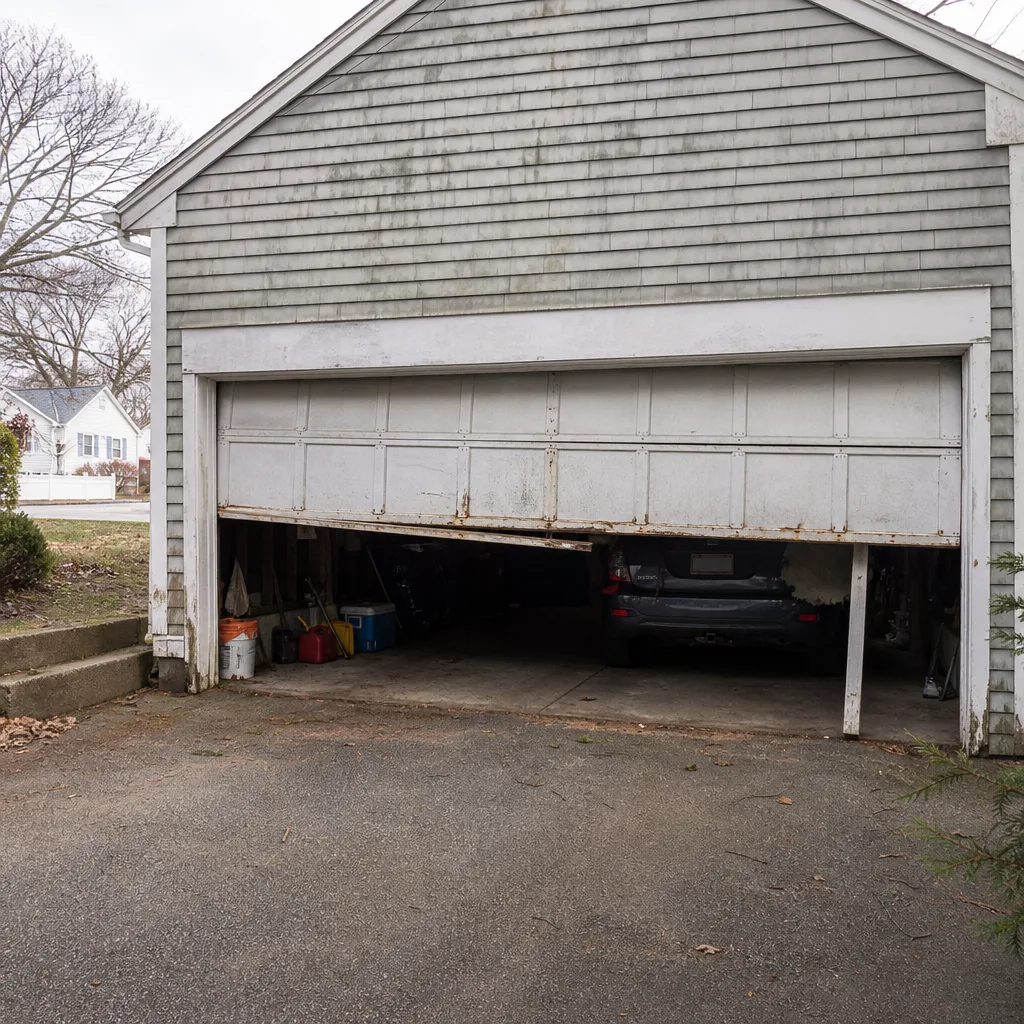 Before
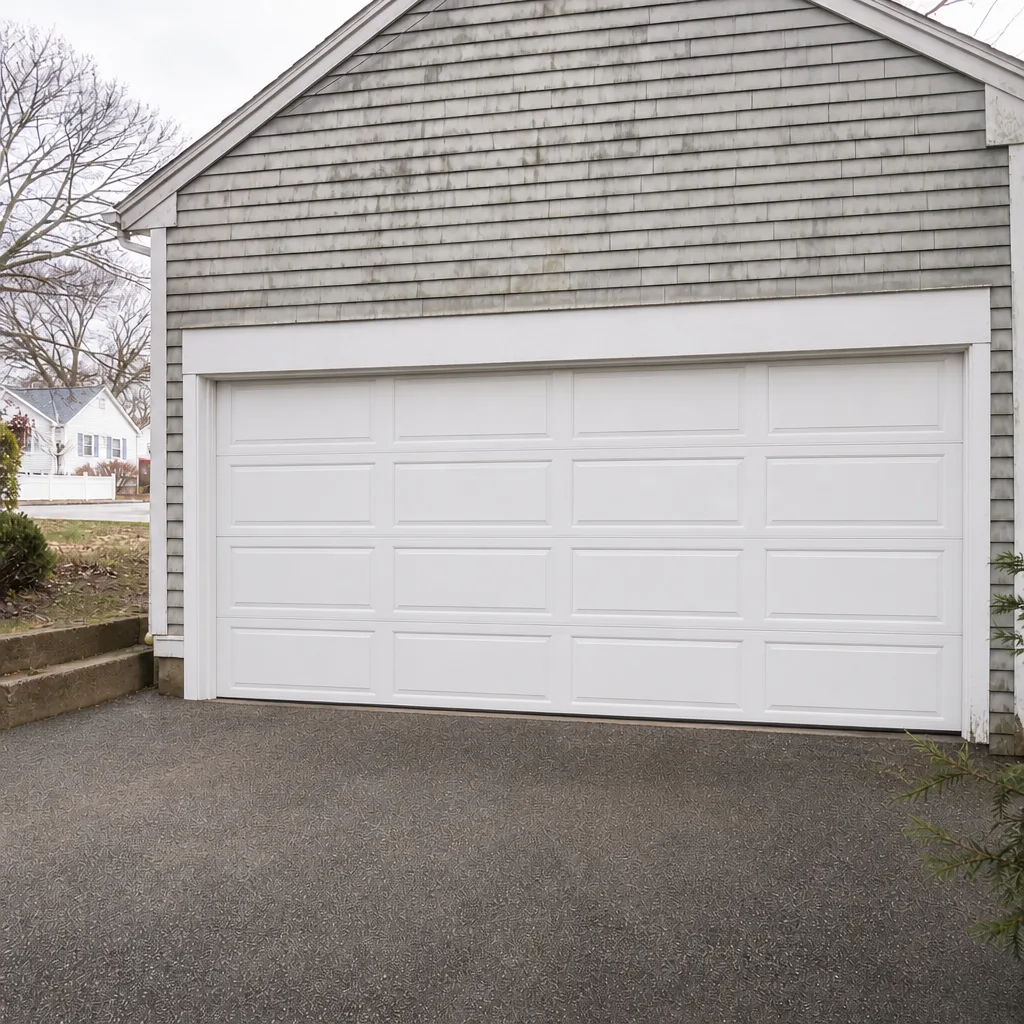 After
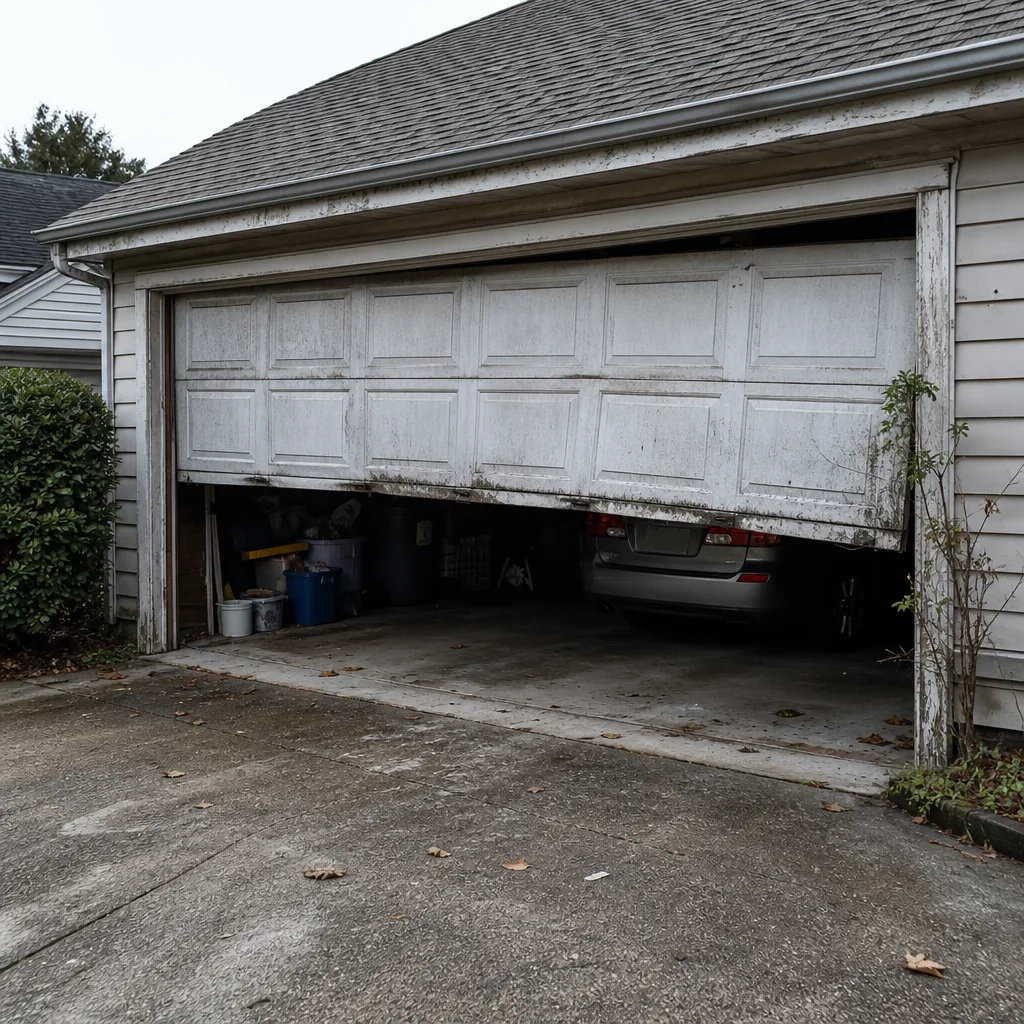 Before
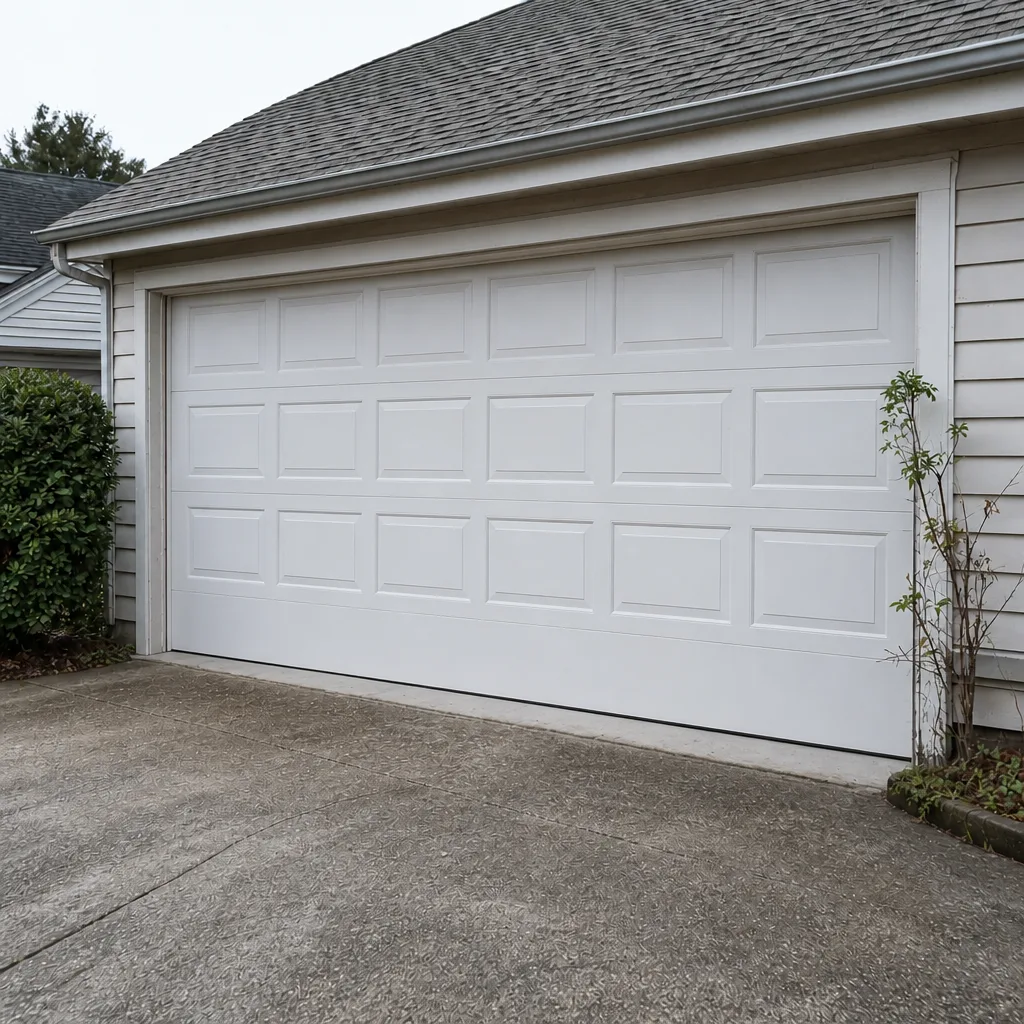 After
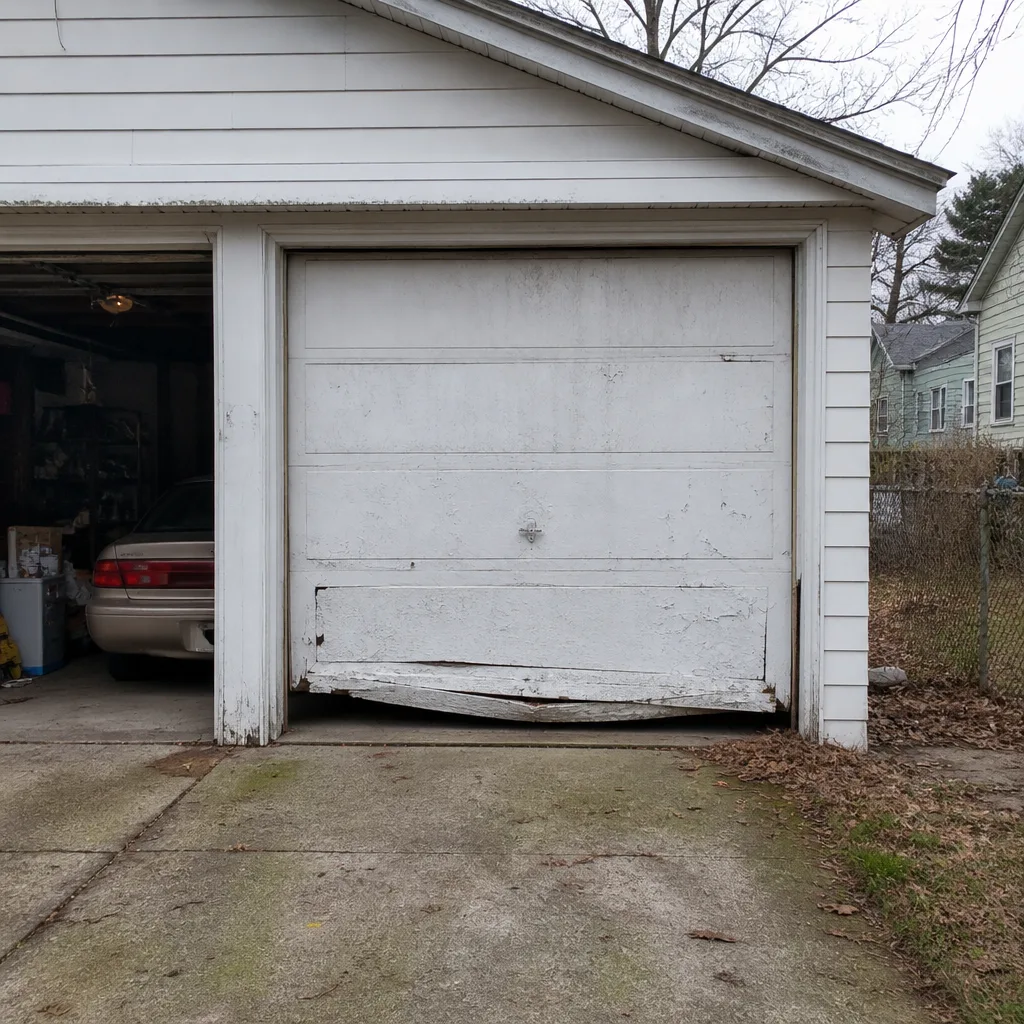 Before
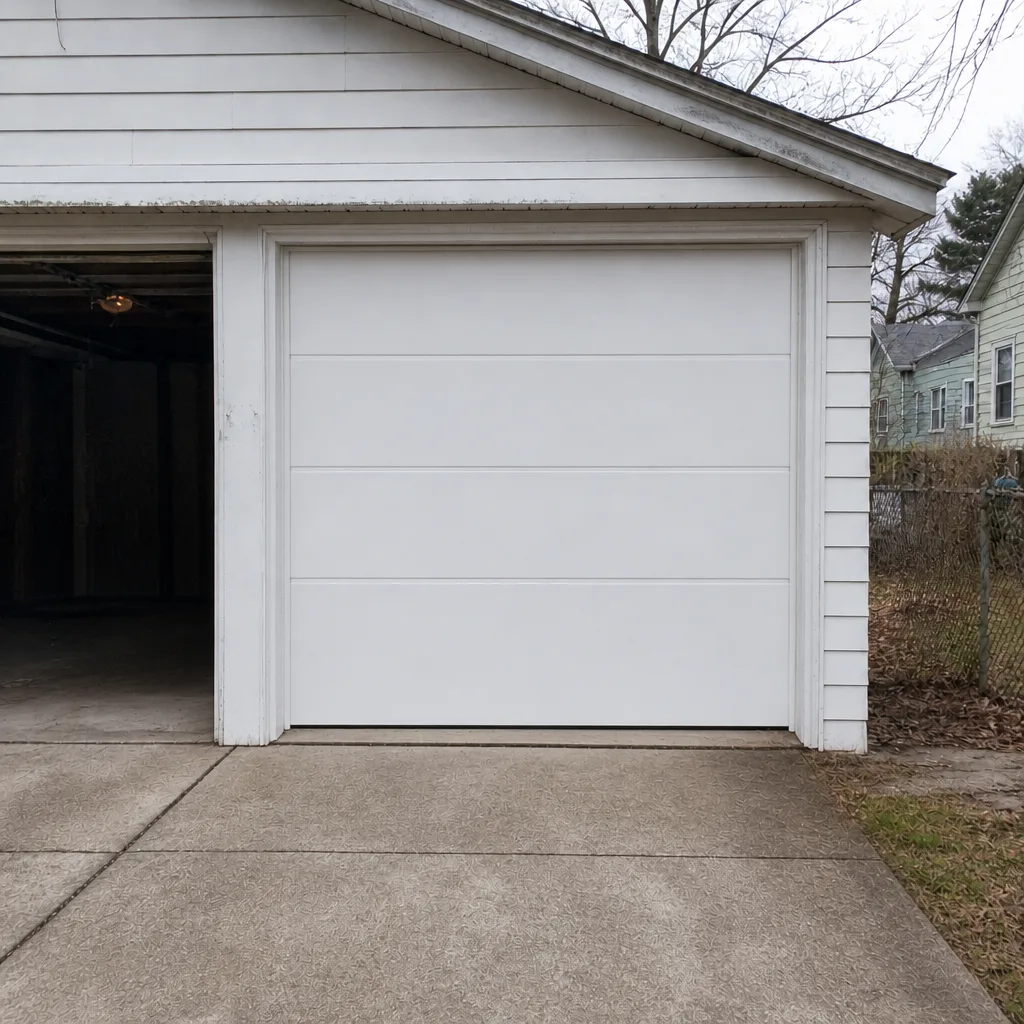 After
When to Call a Professional
Some garage door problems are genuinely a call to a professional, and it’s worth knowing which ones. Any broken spring is a phone call, because the risk of working on it yourself is real and immediate. A door that won’t close and leaves the home open to the street is also a call, and it’s the kind of situation that emergency service exists for. A door that’s come off its track, a cable that’s snapped or is visibly frayed, a door that’s making a noise it didn’t make before, an opener that’s dead and dragging the door with it: those all warrant a trained technician.
Quincy Garage Door Repair Co offers free estimates in Quincy. Call (855) 337-1177 and describe what the door is doing. We’ll tell you whether it’s a repair or a replacement, quote it in writing, and agree the price before any work starts. One call covers it, from the diagnosis through the fix.
Frequently Asked Questions
Most garage door repairs in Quincy fall into a few basic categories, and the price depends on the parts and the labor, which is why a written estimate matters. A single torsion spring typically runs in a set range, and a matched pair is usually replaced together, so it costs about twice that. Openers, cables, and track work each carry their own range. The written estimate sets the final price, and it’s agreed before work starts. Call (855) 337-1177 for an exact quote, because estimates are free.
Yes, for repair and emergency calls we can often come today, so call (855) 337-1177 and tell us what the door is doing. We handle emergency garage door service as a core part of what we do. Installation and full replacement are measured and scheduled, not same-day work, and we’ll quote a free measure and a written price for those. If your door is stuck open or won’t close, call first and we’ll sort the urgency from there.
No, the price you agree to in the written estimate is the price you pay, assuming the job doesn’t turn out to be something different than what was described. The written quote sets the final cost. If we find something on arrival that wasn’t in the estimate, we’ll tell you before doing the work and agree the new number first. We don’t do surprise invoices. Call (855) 337-1177 for a free estimate.
The local pro we connect you with is registered and insured as Massachusetts requires. You can ask for the registration number and the certificate of insurance before work begins, and any serious contractor will provide both without a fuss. Our technicians have up to 10 years of experience, working on LiftMaster, Chamberlain, Genie, Clopay, Amarr, Wayne Dalton, Craftsman, and Raynor systems. Call (855) 337-1177 with any credential questions before you book.
We work on the major brands, including LiftMaster, Chamberlain, Genie, Clopay, Amarr, Wayne Dalton, Craftsman, and Raynor, which covers most of what’s installed in Quincy homes. That means an older door or an unusual opener usually isn’t a problem. Call (855) 337-1177 with the brand and model and we’ll confirm before we come out.
Most cities require a permit for structural changes and some require one for a full door replacement, so the right answer is to ask the city’s building department directly for your address. Permit rules can vary with the scope of the work, and the building department is the authority. If a permit is required, a registered contractor will know how to handle it and will say so. Call (855) 337-1177 if you’d like to talk through whether your job is likely to need one.
The Bottom Line
Hiring a garage door contractor in Quincy comes down to a short list of checks done before the work starts, not the price on the quote. Verify the state registration and the insurance. Ask the five questions, especially about the brand and the warranty. Get the estimate in writing and agree to it before anyone touches the door. Disclose emergency pricing up front. And if the springs are involved, call a professional rather than improvising, because that’s the one part of the job where the risk is real and the cost of getting it wrong is much higher than the repair. The rest is paperwork, and the paperwork is what protects you. For a free estimate in Quincy, call (855) 337-1177.
Written by the team at Quincy Garage Door Repair Co.